 Ohm
Ohm
In 1996, the first Amsterdam Dance Event ran across three venues in central Amsterdam. The budget was roughly 28,000 euros. Around 250 people showed up. ADE 2026 runs across 300 venues with 600,000 festival visitors expected. Those numbers appear in every anniversary piece about the event, and they are correct. But they do not answer the question that matters to a working DJ: what does that growth actually mean from the stage?
That is what this piece is about. The conference track has been covered. The lineup announcements have been covered. What the week means to the people playing the shows has not.
Two Events Using the Same Name
ADE is two events sharing a city, a week, and a brand. The first is ADE Pro: roughly 11,000 industry professionals at panels, keynotes, workshops, and meetings across Felix Meritis on the Keizersgracht and a handful of hotel satellite venues. The 2026 programme includes sessions on AI platform negotiations, streaming economics, and market expansion into Brazil and Sub-Saharan Africa. Pete Tong will be there. So will Spotify's head of dance music. The discussion topics have nothing to do with what happens in a club after midnight.
The second is the festival: 1,200 events across 300 venues over five days. The 600,000 people who come to Amsterdam that week come for the shows. A DJ booked to play at Shelter has no reason to visit Felix Meritis. A delegate attending the artist development panel may not go to a single club night. The two events sit alongside each other without much overlap.
Most ADE coverage treats them as one thing. They are not.
Thirty Years of Becoming the Calendar
ADE started because people wanted to meet. The mobile signal inside De Balie, the 1996 venue on Leidseplein, was weak. The walls were thick. Delegates ended up on the street. What started as a workaround for bad reception became the template for the whole week. Now the Keizersgracht is closed to traffic for the entire week because of it.
Growth since then followed opportunity more than design. When MIDEM, the generalist music conference, dropped its electronic music focus in the early 2000s, ADE absorbed that space. Gary Smith, one of ADE's founding programmers, put it plainly: "A further stroke of luck came a few years after the turn of the century when the more generalist music event MIDEM abandoned its focus on electronic music, leaving ADE to pick up the baton." Germany's Popkomm rescheduled around ADE's October dates and could not take delegates with it. By the end of that decade, ADE was the default end-of-year industry week.
For artists coming up through those years, ADE was where careers moved. Early Dutch DJs who developed real profiles through the event's first decade include Armin van Buuren, Ferry Corsten, and Tiësto. The programme shifted from a narrow house focus to something broader across many genres. Smaller artists got seen by people who could do something about it. Bigger artists got bigger still.
What the Jarre Booking Signals
The guest of honour for the 30th anniversary is Jean-Michel Jarre. He opens the festival on October 21 at AFAS Live with a show called "Oxygène and Beyond: A Sonic Journey Celebrating 30 Years of ADE," a live set built around large-scale projected visuals, spatial light design, and an immersive stage environment. He also gives a keynote at ADE Pro.
Jarre is 78. He is French. He made his name with albums that predate the rave scene by almost two decades. His Oxygène was released in 1976, fifty years ago this year.
That is a deliberate choice. ADE did not pick a techno figurehead or a current house artist to represent the 30th anniversary. It picked someone whose work traces the lineage of electronic music further back than most of the current audience will instinctively reach. ADE's own framing links the booking to a timeline that runs further back than house or techno alone. Booking someone whose landmark album turns 50 in the same year ADE turns 30 is not a coincidence.
Whether that reads as a meaningful statement about the genre's history or as a gesture toward mainstream credibility depends on where you stand. But it is not a casual booking. It is the programming committee saying something specific about where they think electronic music came from.
What Playing ADE Actually Gets You
This is where honest assessment matters. ADE is not a single event where you play in front of 600,000 people. It is a dense programming week where hundreds of artists compete for attention in a city running more simultaneous shows than at any other point in the year.
A slot at a smaller showcase does not guarantee exposure. Journalists, agents, and label representatives are spread thin across dozens of events, and many of the people worth meeting are either in the conference track or at the high-profile shows. The week rewards artists who already have enough profile to get the well-attended slots.
The warm-up DJ role operates on the same logic everywhere: visibility concentrates toward the top of the bill, and a lower-profile booking only counts if the right people are in the room when you play. ADE compresses more of those decisions into a single week than any other point on the calendar. That concentration cuts both ways.
A showcase at a credible venue, in front of the right 300 people, is worth more than a well-publicised slot that nobody with industry weight attends. Being in Amsterdam that week, playing somewhere that matters and having conversations that are harder to have at other times: that is real value. The number of events does not dilute it. It concentrates it.
Is It Still About the Music?
The conference is not. The conference is about the business of music, which is a different thing, and it is not trying to be otherwise.
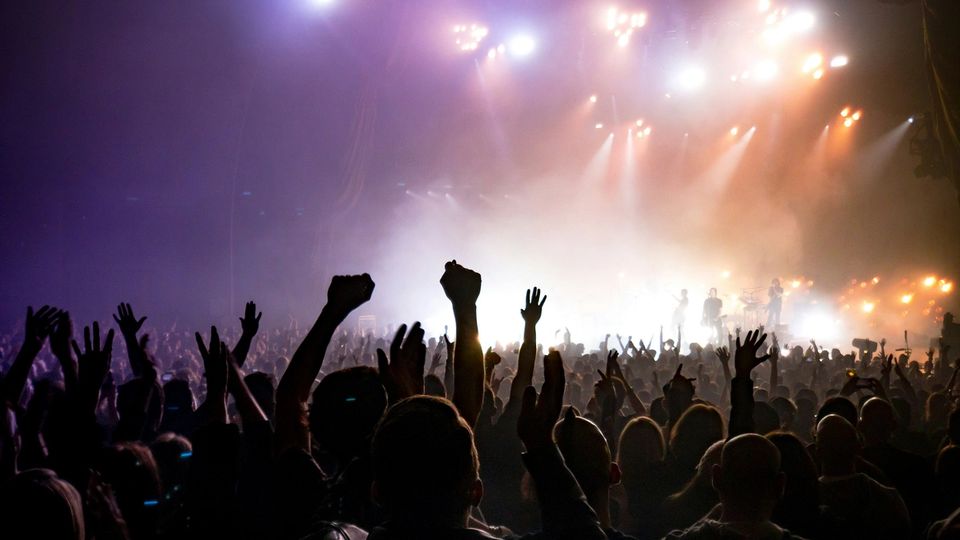
The shows are still shows. The reason 600,000 people come to Amsterdam for those five days is not to attend keynotes. It is because every DJ worth seeing is somewhere in the city, and the chances of being in the right room at the right moment are higher than at any other week in the year.
Thirty years of growth has not resolved the tension between ADE's commercial function and its cultural one. It has made both bigger. That is what scale does. The 1996 event was 250 people talking about dance music at a time when a funding body chairman responded to the request for support by asking: "But it's just not music, dance music, is it, really?!" That question has been answered at scale. The answer is 300 venues and 600,000 people.
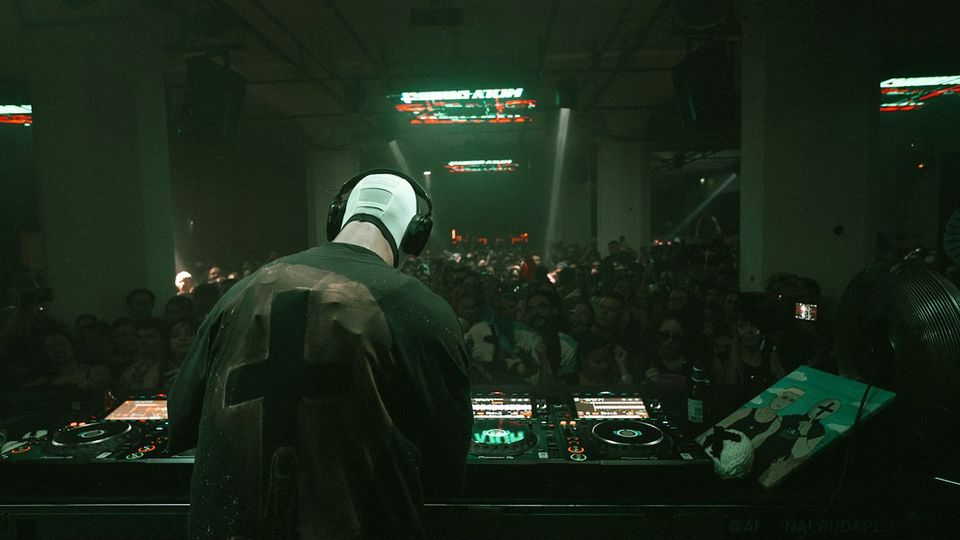
For the DJs playing there, the show exists on its own terms. What happens on the night is the same thing it has always been: a room full of people and the music that gets them there.