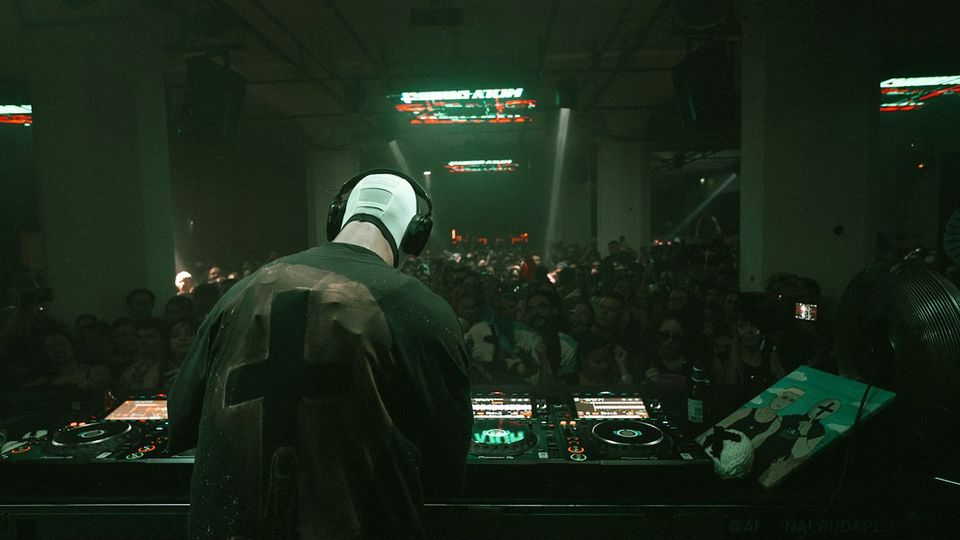
 Ohm
Ohm
You get the call on a Tuesday. You are opening for someone you have been listening to for years. You are on at 10pm; they go on at 1am. Three hours. You know exactly which records you want to play. You have been waiting for a room this good.
The instinct, almost universal the first time, is to treat it like any other set. Play your best tracks. Show what you can do. Prove you belong on the same night. Most DJs who take this approach find, somewhere around midnight, that they have run out of road. The floor is already at a level. There is nowhere to go. The headliner walks in and the room is not ready, it is tired.
This is not a rare mistake. It is the defining mistake of the warm-up slot, and it happens because most DJs approach it with the wrong question. The question is not what you want to play. The question is what the night needs.
What the room is when you start
At 10pm in most clubs, the floor is not a floor yet. It is a space. A few people are standing at the bar. Someone checks their phone near the booth. The sound system in many European venues operates at reduced volume before midnight or 1am, because of noise regulations or house policy. You are not playing into a room. You are building one.
The job at this stage is not to create energy. It is to track the energy that already exists and stay slightly ahead of it, not far ahead. The people who arrive early are not there for the peak. They are there because they like the process of a night building. They want to feel the progression. If you get there before them, the progression disappears and you have nowhere to take them.
The tempo trap
The most common technical error is tempo. A warm-up set for a techno night might begin somewhere around 120 to 124 BPM, building as the night develops. For house, starting between 118 and 122 is a reasonable baseline. Neither figure is a rule. Both reflect the same principle: start below where you are going.
When you start at the tempo and intensity you want to finish at, you create a plateau. The music stays at the same level for two hours. The floor senses it. People whose job is not to analyse the set still respond to it, and what they feel is stagnation. The headliner arrives to a room that is not building, it has been building and then stopped.
The warm-up DJ's craft is deferred release. You are building tension. You are not releasing it. The release belongs to whoever comes on after you.
Serving the night
This is the mindset shift that separates a good opener from a functional one. A warm-up set is not an opportunity to show range. It is a service job, and the best warm-up DJs understand that completely.
The residency model at clubs like Berghain and fabric makes this concrete. Craig Richards spent years as the Saturday night resident and music director at fabric, building an identity around knowing a room better than any one-night guest could. The Berghain resident roster, which includes Marcel Dettmann, Cassy, Ben Klock and Tama Sumo among others, is built on the same principle: depth of relationship with a space, not the headline chase. The club's label Ostgut Ton was founded specifically to release music by these residents. That is not coincidence. It reflects a belief that knowing a room over years produces something that visiting performers cannot replicate.
Tama Sumo has built one of the most respected reputations in European club music without a production catalogue or celebrity adjacency. Just the selection, built over decades of playing for specific rooms and specific audiences. That kind of reputation comes from the opposite of self-promotion. It comes from the work of serving the night.
What to leave behind
The final 30 minutes of a warm-up set are where it either works or it does not. The floor should be warm, engaged, and building. Still going somewhere. The headliner's job is to take it from that point.
What you do not want to leave behind: a room that has already peaked. A floor at maximum energy for the last half hour of your set is a floor that has nowhere to go when the headliner starts. They walk into a ceiling, not a launch point.
The practical question is one of restraint. There are records in your bag that you know would hit hard right now. The discipline is recognising that landing them now serves you, not the night. They go back in the bag. You play something that builds the room to the edge of the moment without crossing over it.
The warm-up slot gets treated as a stepping stone, a support slot you take until you can headline. It is also a discipline that, understood properly, develops something most DJs never fully build: the ability to read a room before it exists and bring it somewhere intentionally. DJs who understand the warm-up tend to understand the dancefloor in ways that show in everything else they do.
If you record your warm-up sets, you can hear whether you got this right. The five-dimension framework in How to Review Your Own Recordings and Actually Improve From Them is as useful after an opening set as it is after a headline one, maybe more.