 Ohm
Ohm
The Hercules DJControl T10 shipped in September 2026 at $1,399.99 USD / €1,299 EUR, with Serato DJ Pro bundled in. It is marketed as the industry's first controller with 10-inch motorized platters. The hardware spec is serious for the price point. The recording picture takes a little unpacking.
What the T10 is
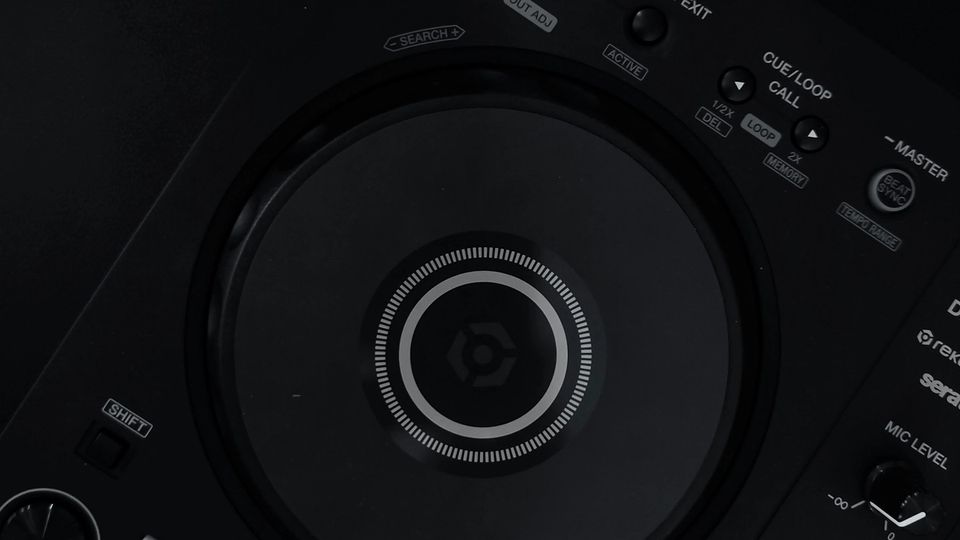
The platters are servo-controlled with brushless motors producing 0.16 Nm of starting torque. Gearnews reports full playback speed in under 100ms. Phil Morse at Digital DJ Tips described the experience after hands-on time: "Once you're mixing on something this size, it feels like using 12-inch vinyl." According to Gearnews it is belt-driven, and that mechanism is what makes the sensation possible at this price.
The crossfader is branded InduXfader. Position sensing works without any physical contact: the fader's location is tracked via magnetic induction, so no wiper degrades the signal over time. Four parameters are adjustable directly on the unit: fader weight, cut curve, cut-lag, and reverse direction. Digital DJ Tips notes it carries InnerFader approval, a third-party quality certification separate from Hercules' own branding.
The software bundle: Serato DJ Pro with Pitch 'n Time DJ, plus DJUCED PRO. Hardware extras include Dr. Suzuki slipmats, vinyl discs, and a UDG gig bag thrown in. Sixteen RGB pads across the two decks.
The two USB-C ports
The T10 has two USB-C inputs, designed primarily for back-to-back use: two DJs can connect simultaneously for seamless changeovers. The secondary port, the one not running the active session, outputs the controller's audio signal.
Phil Morse describes it in his Digital DJ Tips review: "whichever USB isn't running the main show can output the unit's audio directly, so you can plug a phone or second laptop in and record or stream your set instantly through OBS or similar software."
That covers the mechanic. Whether "plug a phone in" means plug an iPhone in is the question this article is built around.
The iOS compatibility question
The honest answer: not confirmed.
Morse references OBS in the same sentence as the phone, and OBS runs on Mac, Windows, and Linux. Whether the secondary USB-C port enumerates as a class-compliant audio interface on an iPhone, without drivers, has not been confirmed in any published source at the time of writing. Neither does the Hercules product page address iOS compatibility for the T10, nor does the support documentation specify it.
This matters because iOS audio compatibility is binary. If the T10 presents itself as a standard USB Audio Class 2.0 device when outputting audio, an iPhone running Ohm will see it immediately. If it requires a driver, it will not work with iOS and you need a separate audio interface in the signal chain.
Gearnews reports the T10 uses 24-bit/44.1kHz USB audio. That resolution does not appear on the Hercules product page. The earlier Inpulse T7 uses 24-bit/44.1kHz, which is consistent, but consistency is not confirmation.
If iOS class compliance is confirmed, the routing is four steps: idle USB-C port to iPhone, open Ohm, select the T10 as audio input, record. The workflow covered in Record Your DJ Set From a Controller: No Audio Interface Needed applies directly.
If the T10 is not class-compliant for iOS, the path is to run the output to a known iOS-compatible USB audio interface and connect that to the iPhone instead.
Why the InduXfader matters for recording
Standard contact crossfaders use a physical wiper on a resistive carbon track. Under heavy use and fast cuts, that introduces noise, resistance variation, and signal dropouts. A recording captures all of it.
The InduXfader has no physical contact in the position sensing. Magnetic induction reads the fader position without touching anything. For scratch recording, crossfade transitions in the captured audio come through clean regardless of cut speed. No wiper noise. No mid-cut artifacts from a worn track.
This is directly audible at 24-bit resolution, where the noise floor is low enough to expose the difference between a fresh fader and a worn one under high-speed cutting. If scratch sets are part of your recording output, the contactless mechanism is a genuine quality consideration, not just a durability one.
The verdict as a recording platform
At €1,299, the T10 is not a casual purchase. What it delivers: 10-inch motorized platters for vinyl-style performance, a contactless crossfader that will not degrade your scratch recordings over time, and a secondary USB-C port that can feed your mix to a connected device.
The caveat is specific. If you are buying the T10 to record directly to iPhone, confirm iOS class compliance with Hercules before committing. That single question determines whether the recording workflow is plug-and-play or requires an additional interface. The hardware is strong either way. The setup is different depending on the answer.