 Ohm
Ohm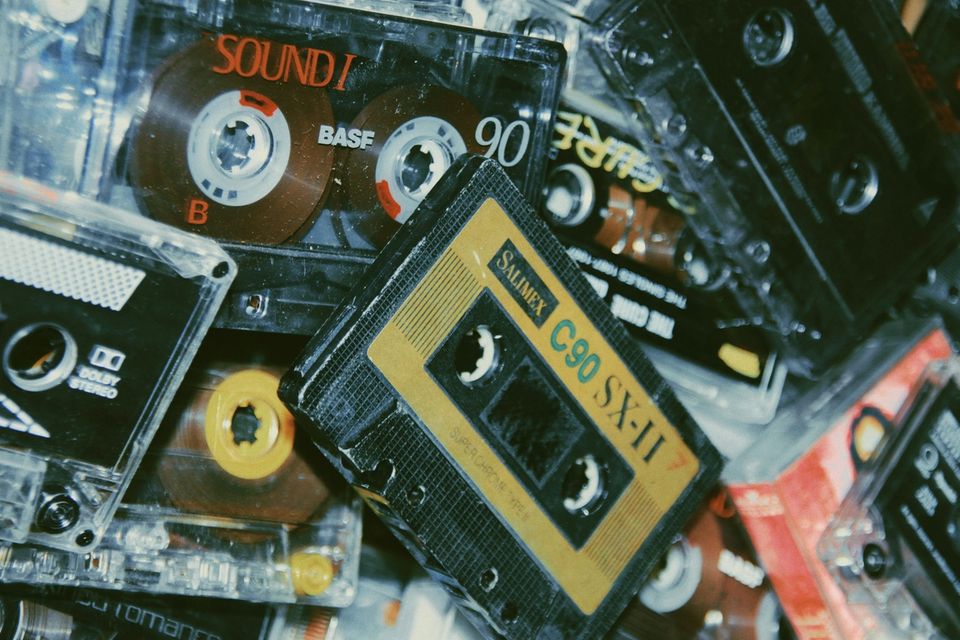
There was a cassette tape at every party that mattered. Someone was always recording. Promoters sold tape packs at the exit; pirate copies circulated through record shops, barber shops, and the boots of cars. You couldn't watch it on YouTube, share it to SoundCloud, or DM someone the link. You handed someone a physical object, and if it was good enough, it kept moving.
The recorded DJ set has been part of this music since before it had a name. It has changed its format completely, several times over, and the logic behind it has shifted with every change. But the core of it has remained: a set is temporary. A recording makes it last.
Before the internet
UK rave culture in the late 1980s and early 1990s built an entire informal economy around recorded sets. Promoters including Helter Skelter, Fantasia, and Universe sold official tape packs of their events. Unofficial recordings circulated alongside them. A DJ could play a warehouse in the north of England and have their name known in London before they had ever driven there, because the tape had already arrived.
The same logic ran through US hip-hop DJ culture. DJs including DJ Clue, Kid Capri, and DJ Drama built their reputations through cassette and CD mixtapes distributed through record shops, barber shops, and street corners. You had no other mechanism for reach. If you wanted anyone outside your city to know you existed, the recording had to do the travelling.
When the mix became a product
By the mid-1990s, something had shifted. The recorded set was no longer just documentation or bootleg. It was something you could buy in a proper shop.
Renaissance: The Mix Collection, compiled by Sasha and John Digweed in 1994, was one of the first DJ mix albums to become a genuine commercial success. Released the same year, DJ-Kicks on !K7 Records began what would become one of the most significant artist mix series in electronic music, with volumes by Kruder and Dorfmeister, Ricardo Villalobos, Four Tet, and dozens more. Fabriclive launched in 2001 with Speedy J and ran to at least 98 volumes, documenting the taste of fabric London across a decade of club culture.
Radio had already started doing the same work. Pete Tong's Essential Mix launched on BBC Radio 1 in 1993 and has run weekly since. A slot on the Essential Mix carried weight that no booking, review, or press feature could fully replicate: two hours on the most listened-to dance radio station in the world, preserved as a recording that anyone could get hold of.
The effect of all of this was to legitimise the mix as a cultural object in its own right. Not a document of a night. A work.
The SoundCloud era
SoundCloud launched in 2007 and by the early 2010s had become the place where DJ mixes actually lived. The change was structural. For the first time, you did not need a radio station, a label, or a club to distribute a recorded set. You uploaded it. It was there.
What followed was a flood. Every DJ with a USB drive and an internet connection could put a mix in front of an audience without permission from anyone. What was gained was obvious: access, reach, the end of gatekeepers. What changed was harder to name. When every DJ could publish a mix every week, the individual mix meant something different from what it had meant when it was a physical object sold outside a venue or a deliberate commercial release.
Boiler Room arrived in 2010 and introduced the visual dimension. Filmed sets from a small space in London, streamed on YouTube. The format added something the audio recording never had: you could watch the DJ work. The set became viewable as well as listenable, and unlike a club night, it was permanent.
Now
The podcast era ran quietly alongside all of this. From the mid-2000s, RSS podcast distribution let DJs publish monthly or weekly mixes directly to anyone with a podcast app. Resident Advisor's podcast programme became one of the most significant platforms for this, connecting a global audience to DJs they might never have heard otherwise.
Then, in March 2020, almost every club in the world closed at once. DJs moved to Twitch, YouTube, and Instagram Live within days. What had been a niche format became near-universal among professional DJs within weeks. Not because the technology was new but because there was suddenly no other way to play.
The streaming set has been a permanent part of the landscape since. A recorded set published today can reach an audience that no radio show in 1993 could have touched, even with no label, no promoter, and no publicist. The reasons for recording have changed completely. In 1991, a tape was the only proof a night existed after the lights came up. Now it is how a set finds its real audience, long after the party ended.