 Ohm
Ohm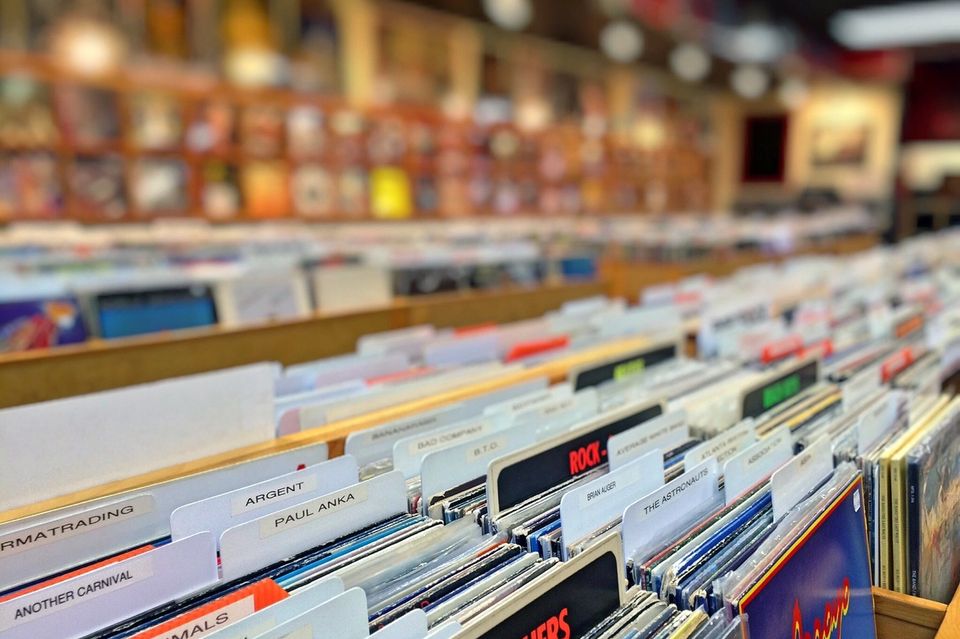
"Keith believed records are ultimately there to be played, discovered and loved." That sentence, from Marissa Costello's foreword to the sale, explains what is about to happen to the JD Twitch record collection, one of the most admired in British club culture.
Costello is Keith McIvor's widow. Clubs knew him as JD Twitch, one of the two DJs behind Optimo (Espacio). He died of glioblastoma on 19 September 2025, at 57. It is an aggressive brain tumour, and there is currently no cure. Now his records are going back into the racks.
The sale
World of Echo, the independent shop at 46 Cheshire Street in Shoreditch, has bought the collection and is selling it in two parts. The first, somewhere between 7,000 and 8,000 records by the shop's count, opens to buyers at 10am on Saturday 14 November 2026, strictly in person. Until Thursday 19 November the whole shop is handed to Keith's records. Whatever is left then joins the regular second hand stock. The second part is due early in 2027.
A "World of JD Twitch" sticker goes on every record. In Costello's words, it means that "wherever individual records eventually travel, there will be a small reminder of the collection they once belonged to and the person who chose them."
There is a second reason to visit. Keith's friends and family have put together memorial fanzines, and the shop is the only place to pick one up. There is no price on them. You give what you can to the Keith McIvor Glioblastoma Research Fund, set up by the family to pay for research into the disease in Scotland.
Even the shop's name fits: it is borrowed from World of Echo, the Arthur Russell album, and Costello describes Russell as "an artist Keith adored."
A selector who never stayed in one lane
McIvor came from Balerno, just outside Edinburgh. Pure, at The Venue in Edinburgh, was where people first heard him in the early 1990s, and he was among its residents from the beginning. When Pure closed in 1997, he and Jonnie Wilkes (JG Wilkes) started Optimo. Their Sunday night at the Sub Club in Glasgow lasted from that year to 2010.
On any one night there, according to RA's obituary, the music could run from free jazz and no wave to disco, techno and industrial, with dub, house, pop and post punk in between. The party took its name from a 1983 Liquid Liquid EP, and the band themselves came to play, as did ESG, LCD Soundsystem and Grace Jones. Once the Sub Club years were over, the pair spent 15 years touring, held residencies at Phonox and The Berkeley Suite, and kept a monthly NTS show going. There was the Optimo Music label too, and in lockdown Cease & Desist, McIvor's cassette label for themed mixes.
He put the approach plainly in a 2016 Skiddle interview, quoted by RA: "I've never felt particularly aligned to anything so I'm neither a Chicago house purist nor a Detroit techno purist."
Wilkes, speaking to Mixmag in September, was just as direct about his partner: "He was hands down one of the greatest DJs I've ever heard."
A working collection
The most telling part of Costello's foreword is how she describes the records themselves. "Some were carefully protected in sleeves and meticulously looked after; others bear the scars of years spent being pulled in and out of DJ bags and played in booths around the world. They were a working collection and were very much lived with."
It started early. When his grandfather died, she writes, "a young Keith spent all the money he inherited on records," to his dad's disapproval. It never stopped either. "Almost every trip he made anywhere in the world involved seeking out local record shops and coming home with more records."
Which leaves a real question, and Costello names it herself. "We know that people will have different opinions about what we should have done with it." A collection like this could have gone to an archive, a university, a museum, kept whole as a document of one person's taste over a lifetime. That would have had value. Researchers and fans could have studied the shape of it.
The family decided against it. Costello writes that the collection "could never remain intact forever in quite the way it existed around him," and that they wanted his records "to be played and enjoyed rather than simply kept because they once belonged to him." They chose an independent shop on purpose. McIvor, she writes, made "a point of buying directly from shops, labels and artists whenever he could."
You can disagree and still see the logic. An archive keeps a collection safe. Selling it keeps it in use, and these records were bought to be used.
Records in other people's bags
Picture where these sleeves might end up. A copy of something odd from his crates gets pulled out in a basement in Leeds next spring. Someone in Glasgow opens a set with a record that still has the sticker on it. Nobody on the floor will know. The DJ will.
Wilkes described something like this to Mixmag, about playing out without his partner: "there have been many occasions in the last year when I've played something and it's felt very meaningful to me. Then on reflection, it's been a record that meant a lot to Keith too."
That is what a great selector leaves behind: the choosing, and the passing on, which other DJs absorb and carry into their own nights. Ownership was never the point. Thousands of his records are about to do that in the most literal way.
What stays
One thing a record collection cannot hold is the sets. The order, the risks, the transition that should not have worked and did. A collection can be scattered and still mean something. The nights a DJ played survive only if somebody recorded them, and for Optimo that record lives in radio shows, mixes and other people's memories.
Leaving it until it is too late is easy. If you play out, record your sets, even the ones that feel ordinary. An app like Ohm will record a set straight to your iPhone and mark each track with a named cue point, so years later you can see what you played and in what order. Our five checks before recording a DJ set cover the basics.
Then go to World of Echo in November, or donate to the research fund if you cannot. Costello's own summary of what Keith stood for is better advice than anything here: "Connect with your community, support those who need it, be kind, support your local record shop, support outsider artists, and keep it weird."